
Integrated Campaign Operations
Uber integrated campaign operations
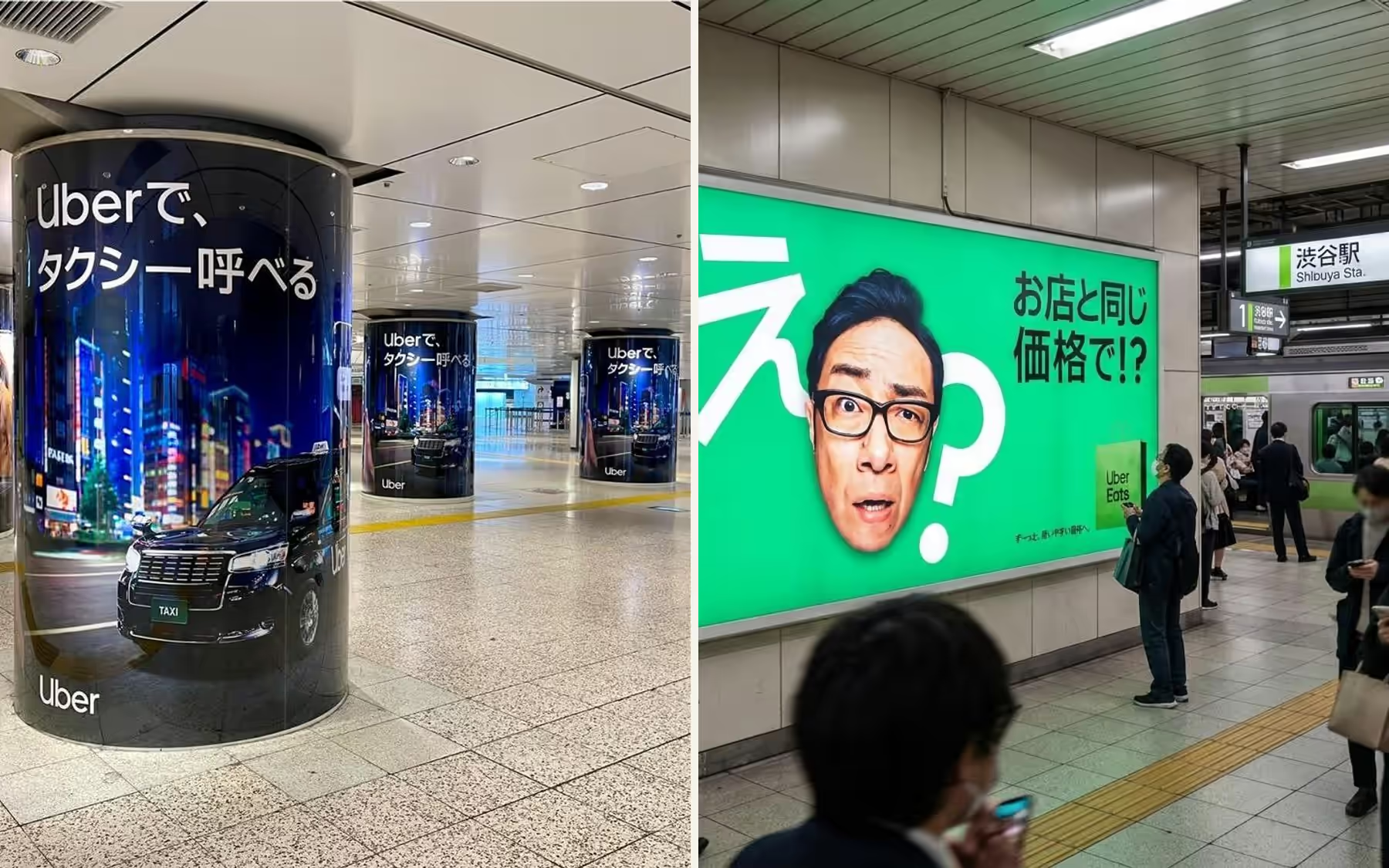
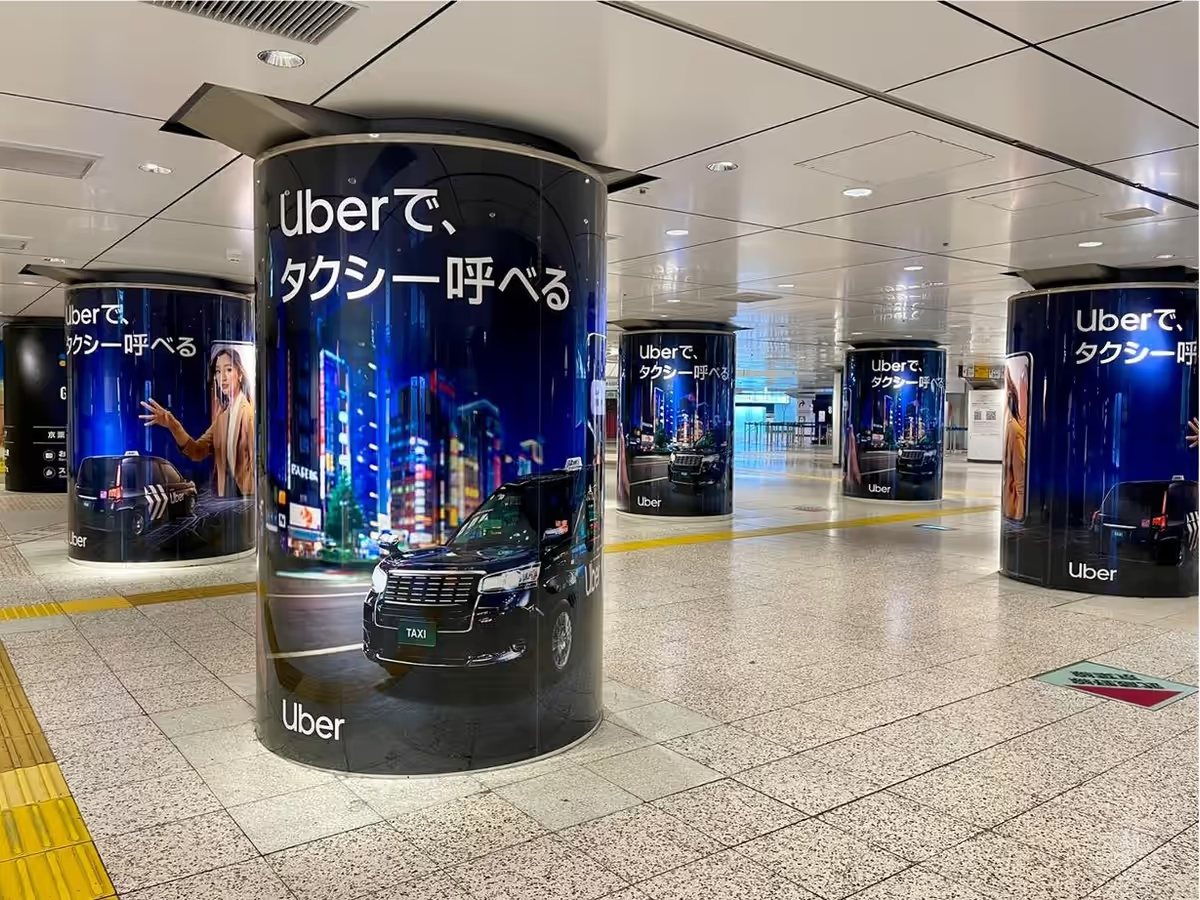
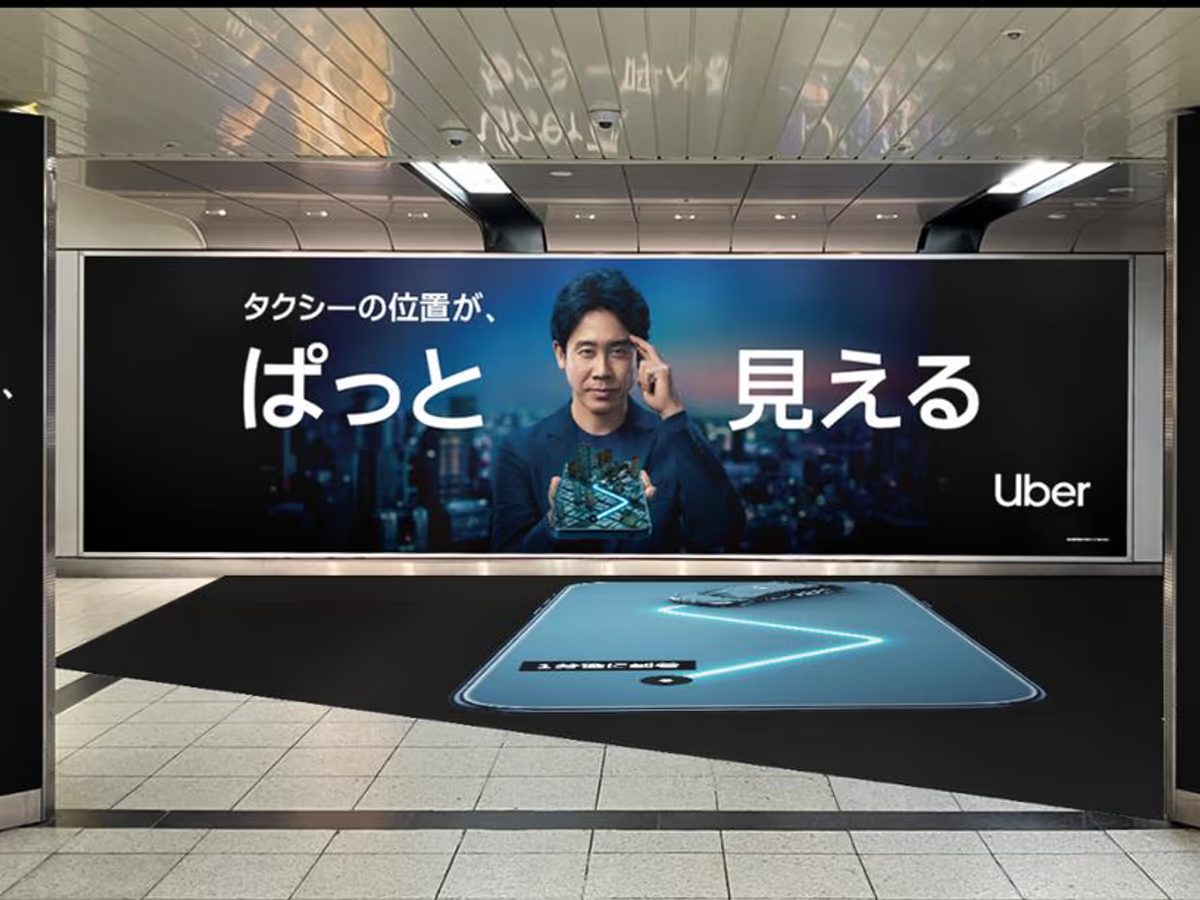
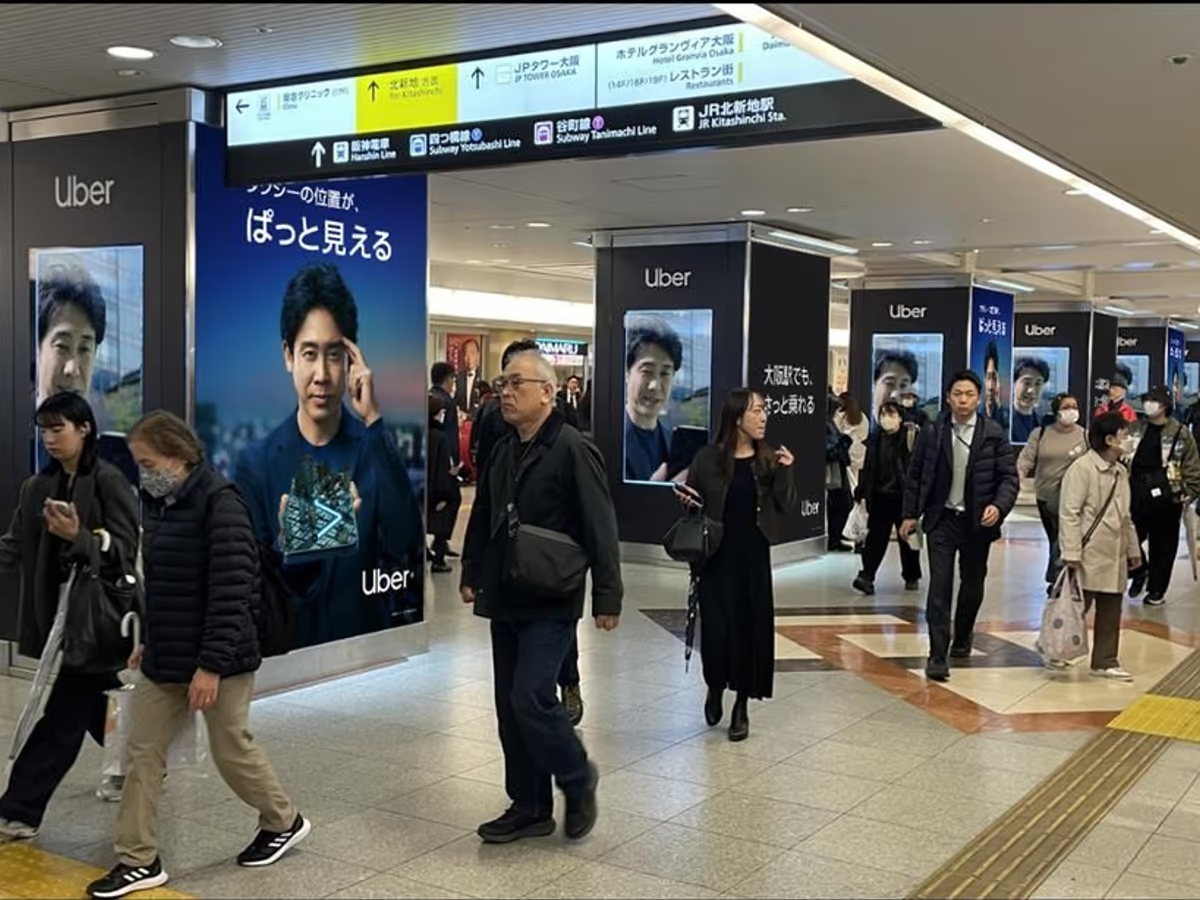
Project management and creative operations support for integrated Uber Taxi and Uber Eats campaigns delivered across Japan and Australia.
- Client
- Uber (Uber Taxi, Uber Eats)
- Year
- 2025–
- Category
- Integrated Campaign Operations
- Role
- Project Manager / Creative Operations
From the campaign
The work

- Cross-functional stakeholders
- 20+Cross-functional stakeholders
- Cross-office delivery
- Japan + AustraliaCross-office delivery
- Project duration
- 5–7 moProject duration
- Campaign budget
- USD 2M+Campaign budget
- Concurrent workstreams
- MultipleConcurrent workstreams
- Bilingual delivery environment
- EN / JABilingual delivery environment
Project-scope indicators, not personal achievement claims.
Overview
Integrated campaigns for Uber Taxi and Uber Eats in the Japanese market, run as a cross-office programme between teams in Japan and Australia. My work was the internal operation that got each project through: the creative team's schedule and meetings, resourcing, coordination, tracking and delivery readiness across every workstream.
Situation
Context
The campaign combined strategy, creative, production, account, media, finance, external partners and client stakeholders. Two offices in two time zones worked on shared deliverables, in two languages, with approvals moving between them. The operating load was as large as the creative load. The Uber Eats work ran alongside the Uber Taxi programme rather than in isolation, sharing creative and production resource, so coordination had to account for everything else in flight.
Challenge
With 20+ people contributing across Japan and Australia over a 5–7 month cycle, the constraint was not effort but visibility. Ownership, dependencies and approval sequence had to stay legible to everyone at once, or schedules would drift and decisions would stall waiting on the wrong person.
Scope
Scope
- Integrated schedule covering strategy, creative, production, media and localization
- Resource planning and allocation across concurrent workstreams
- Japan and Australia cross-office coordination and time-zone alignment
- Stakeholder communication and status reporting to leadership
- Production tracking from pre-production through delivery
- Budget visibility and spend tracking against plan
- Risk identification, escalation routes and change handling
- Approval readiness and delivery checks
- Resource coordination against other concurrent campaign work
- Change request handling and downstream impact assessment
- Team
- 20+ people across Japan and Australia
- Stakeholders
- Strategy, creative, integrated production, account management, media, finance, external production partners and client-side stakeholders.
Role and ownership
What the organization delivered
The agency delivered integrated Uber Taxi and Uber Eats campaigns spanning strategy, creative development, production, media and localization for the Japanese market.
What I personally owned
- Built and maintained the integrated schedule used as the single source of truth across both offices
- Ran resource planning and allocation across concurrent workstreams
- Coordinated Japan and Australia teams across time zones, in Japanese and English
- Tracked production status and surfaced slippage before it reached downstream dates
- Maintained budget visibility against plan and flagged variance
- Clarified ownership, dependencies, approval steps and escalation points
- Prepared and circulated status reporting for team and leadership
- Coordinated shared creative and production resource across live projects
- Assessed and communicated the downstream impact of change requests
What resulted
- Helped teams execute integrated Uber Taxi and Uber Eats campaigns over 5–7 month delivery cycles
- Maintained delivery visibility across 20+ stakeholders in Japan and Australia
- Kept complex creative and production schedules organized across multiple concurrent workstreams
- Reduced schedule ambiguity by creating a clear source of truth for teams, partners and leadership
- Created a more stable operating rhythm across creative, production, account, finance and client teams
- Helped creative teams stay focused by managing operational complexity around them
Operating model
Single source of truth
One integrated schedule both offices worked from, rather than parallel local plans that quietly diverge.
Named ownership
Every deliverable carried an owner and a decision-maker, so nothing waited in an unassigned state.
Time-zone aware sequencing
Handoffs were planned around the Japan–Australia overlap so a day was never lost to a missed window.
Bilingual documentation
Status, scope and approvals were legible in both Japanese and English rather than translated after the fact.
Cross-project resource view
Capacity was read across all live campaigns at once, so a change here was visible as a change everywhere.
Key decisions
- 01One schedule, not twoBoth offices worked from a single integrated plan. Local sub-plans were allowed underneath it, but the shared schedule stayed authoritative for cross-office dates.
- 02Escalate on dependency, not on delayEscalation triggered when a dependency became unowned or unclear, rather than waiting for a date to be missed.
- 03Protect the creative windowOperational questions were batched and routed away from creative teams during production peaks.
- 04Price every change in datesNo change request moved forward without its schedule and resource impact stated, so trade-offs were made deliberately rather than absorbed.
Delivery details
Deliverables
- Integrated master schedule
- Resource allocation plan across workstreams
- Weekly status reporting for team and leadership
- Production tracker
- Budget status view against plan
- Risk and dependency log
- Approval and delivery checklist
- Cross-project resource view
- Change request log with impact assessment
Risks and constraints
- Time-zone gap compressing the usable working overlap between offices
- Approval chains crossing two organizations and two languages
- Concurrent workstreams competing for the same creative and production resource
- Late-stage change requests colliding with fixed production and media dates
- Translation and localization dependencies sitting on the critical path
Tools and systems
- Asana
- Google Workspace
- Slack
- Spreadsheet-based resource and budget tracking
- Shared review and approval workflows
What changed
Teams, partners and leadership shared one reference for where the work stood, who owned each piece and what had to be decided next. Schedule questions previously resolved through individual conversations became visible in one place.
Lessons learned
- Cross-office delivery fails on ambiguity long before it fails on capacity.
- A schedule is only a source of truth if both sides can read it without translation.
- Naming the escalation point in advance is what makes escalation usable under pressure.
- In a shared-resource environment, a project plan that ignores neighbouring projects is fiction.
Next case study
Creative resource and workflow operations